
Essex County Council
Research, Service Design
Amidst a whole-of-council transformation and ahead of Local Government Reorganisation, Essex County Council (ECC) recognised a critical opportunity to intentionally shape and improve how residents access and experience its services. ECC partnered with my company to adopt a 'one team' approach focused on understanding end-to-end resident journeys. I was the lead service designer on this project.
*Some imagery has been redacted/witheld due to confidentiality commitments with Essex County Council
Research Sprint
As Service Design Lead I led our approach to research on this project.
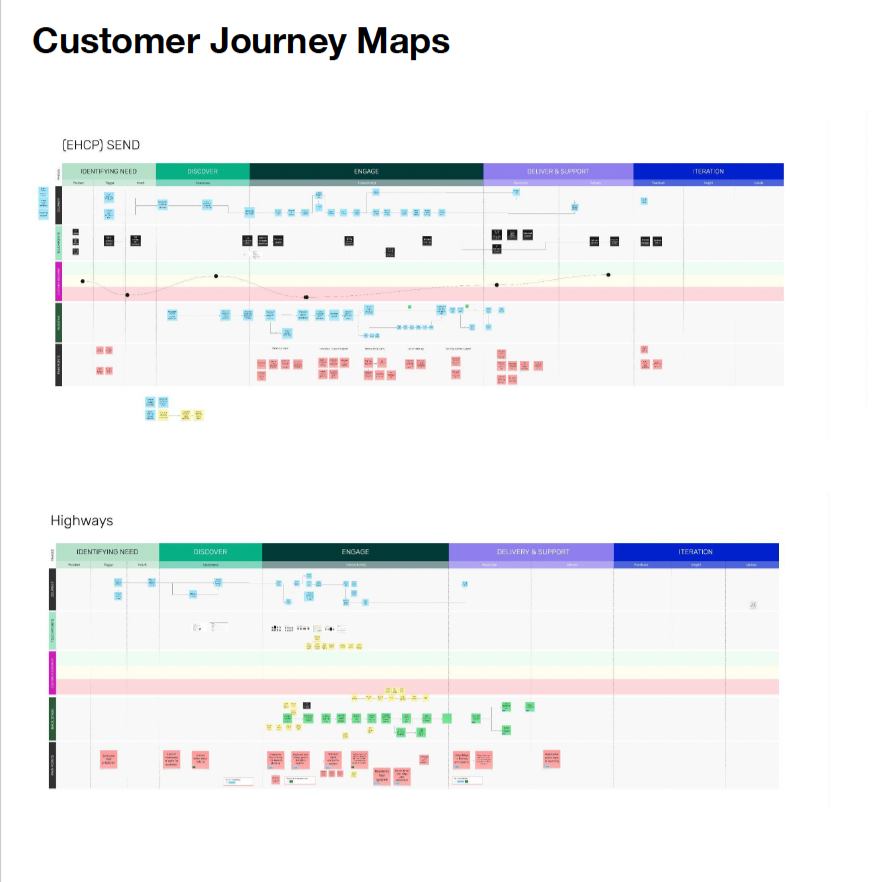
The team began with a quantitative deep-dive. Analysing existing data to determine that Blue Badges, Special Educational Needs and Services (SEND) and Highways were the areas where there was most potential for upside.
From this point we built a strong evidence base across all three service areas, consolidating existing research while filling critical gaps around lived experience. This included exploratory interviews with ECC stakeholders, in-depth interviews with 27 residents, journey mapping workshops with delivery teams, and early concept testing.
The most important decision I made was methodological: rather than producing three separate sets of findings, we deliberately looked for patterns across journeys, where communication, processes, and decision-making were failing residents in the same ways regardless of service area. This cross-cutting approach is what gave the work its strategic value.
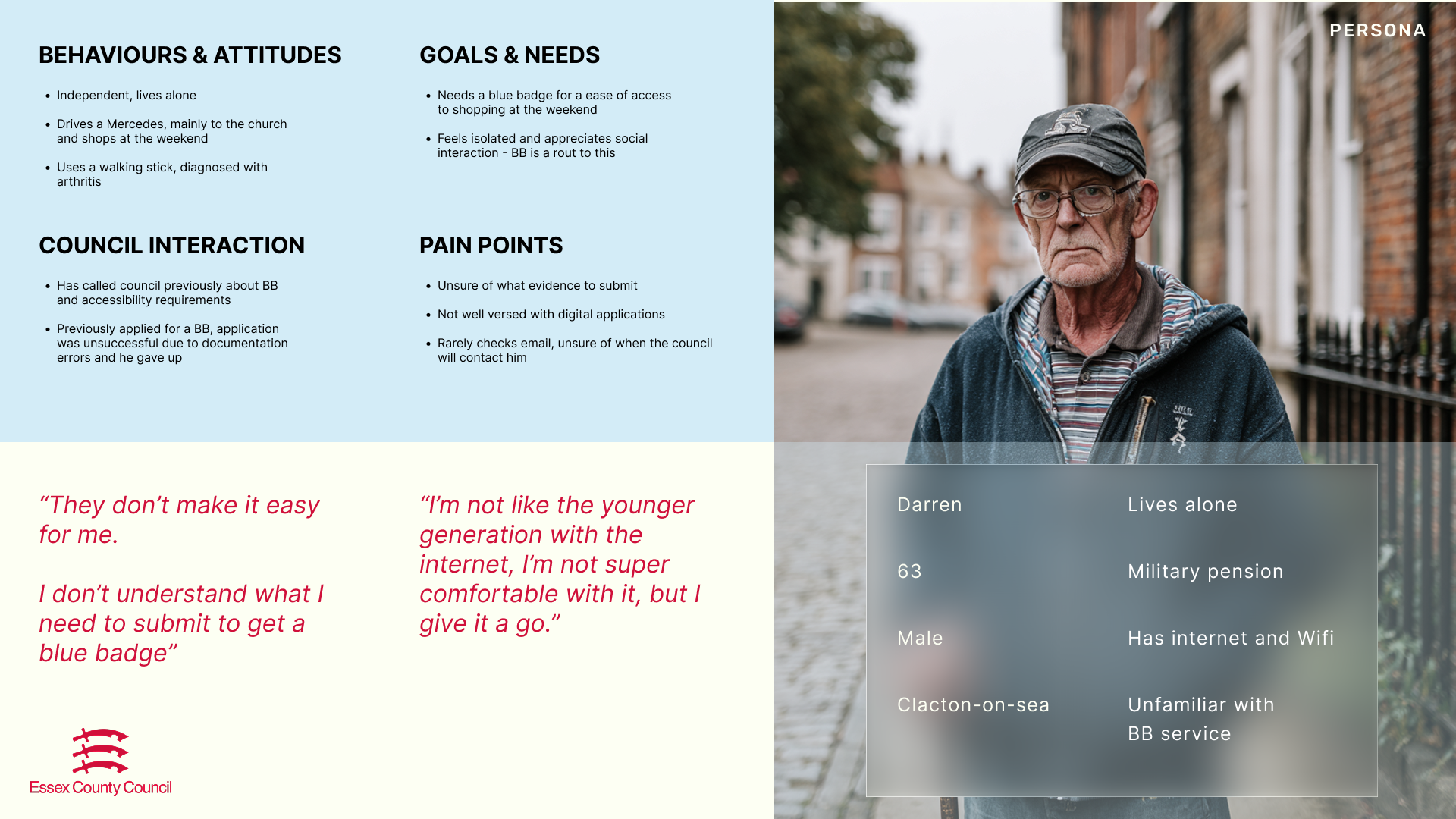
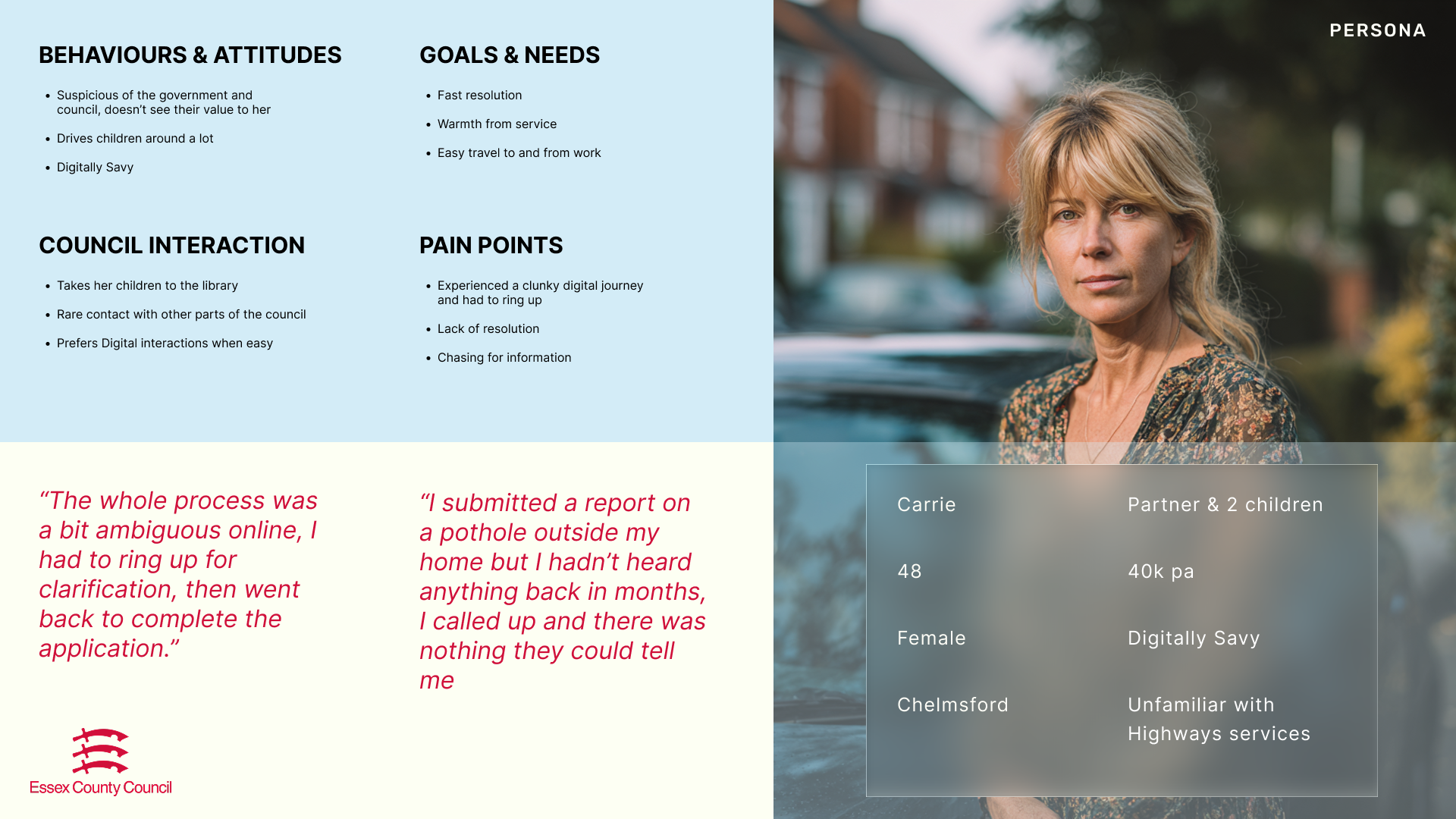
Two Persona’s I built from our qualitative research
Imagery was created with Midjourney AI
Deep Human Insight
Despite the differences between SEND, Blue Badges, and Highways, residents consistently came back to the same three unanswered questions:
Where do I go? Residents struggled to understand pathways, ownership, and who could actually help. Fragmented services and inconsistent information left people looping between channels and teams.
How long will it take? A lack of visibility on timelines and progress created anxiety, particularly for long-running cases. Silence during waiting periods led residents to chase updates, lose confidence, and assume nothing was happening.
How do I get them to listen? Residents had to repeat sensitive stories across channels. Digital routes felt transactional, and phone contact used as a last resort was deeply disappointing when empathy or answers were missing.
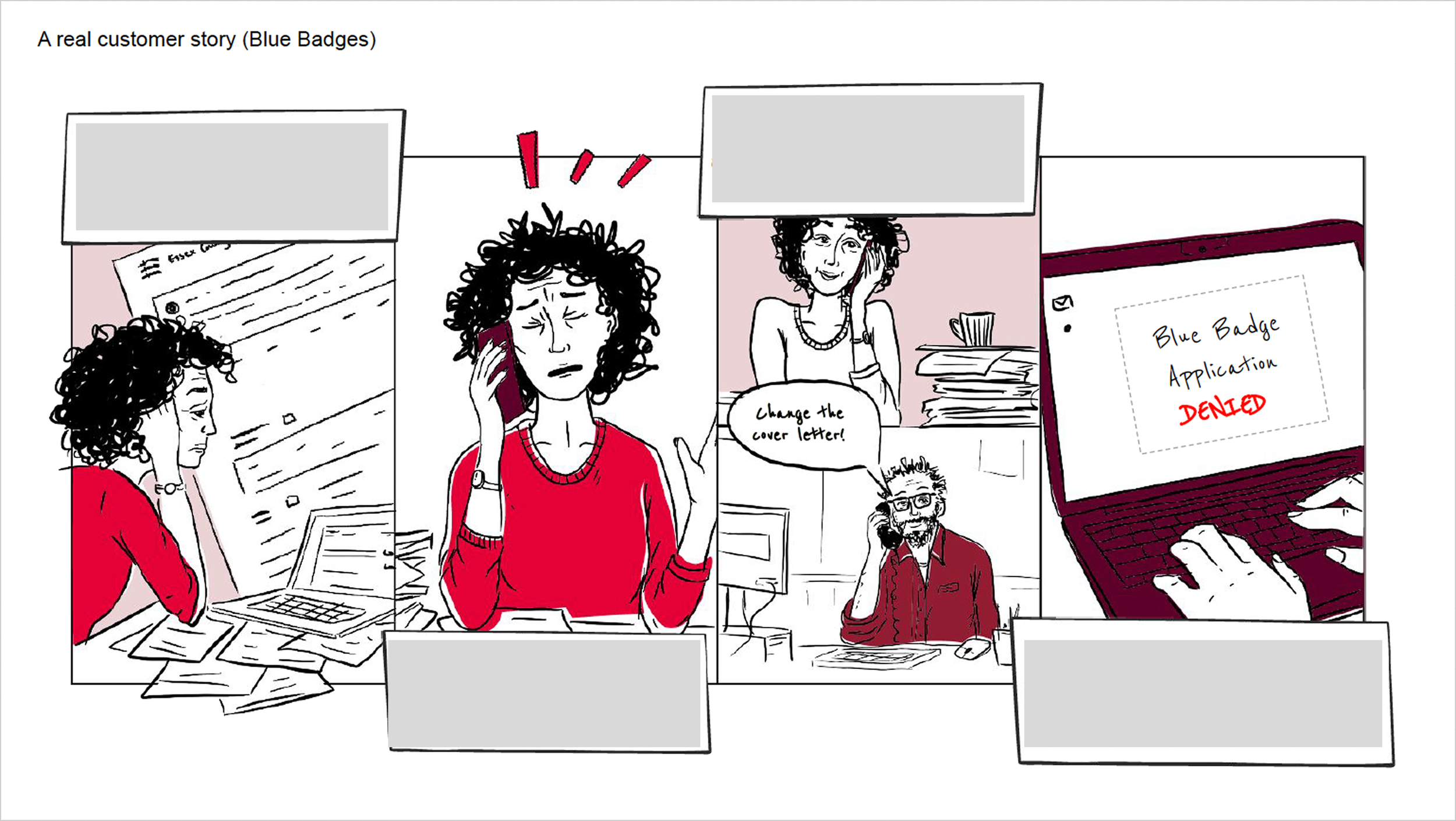
A storyboard we created to tell the story of our research. I like to produce these alongside Blueprints as they are better at communicating moments that matter to stakeholders
Design
I translated these insights into opportunity areas through How Might We questions focused on clarity, progress, and empathy, then developed and tested a small number of concepts designed to work across services:
Customer Portal — a single place for residents to submit requests, track progress, and receive updates without needing to chase.
Real-time Progress Indicators — making timelines, next steps, and delays visible, even when nothing has changed. The insight here was that silence is the biggest driver of anxiety — so communicating "no update yet" is itself valuable.
Experience Milestones — proactive communication about what happens next, when residents can expect contact, and what they can do in the meantime.
These weren't just digital features. They were designed as experience patterns that could flex across services and channels, reducing avoidable contact and emotional friction for residents while giving staff clearer frameworks for communication.
Concept testing showed residents most valued ideas that broke complex journeys into manageable steps, reduced anxiety during waiting periods, and tailored information to their specific circumstances rather than giving generic updates.
Two interactive prototypes I built from sketched wireframes, ChatGPT and Figma Make
Impact
This work gave ECC something it hadn't had before: a unified, evidence-based view of how residents actually experience its services, cutting through organisational silos.
It delivered a shared experience narrative that resonated across directorates, clear and scalable principles for improving communication and trust, and validated concepts with strong resident support. Most importantly, it shifted the conversation from channel efficiency to transparency and empathy creating a foundation for service transformation grounded in what residents actually need.